
Want to buy a car from the US without getting a pig in a poke? One simple step can save you thousands of dollars: checking the car’s VIN. Find out everything about the car before you buy and make a decision with confidence.
What is a VIN code and what information does it provide?
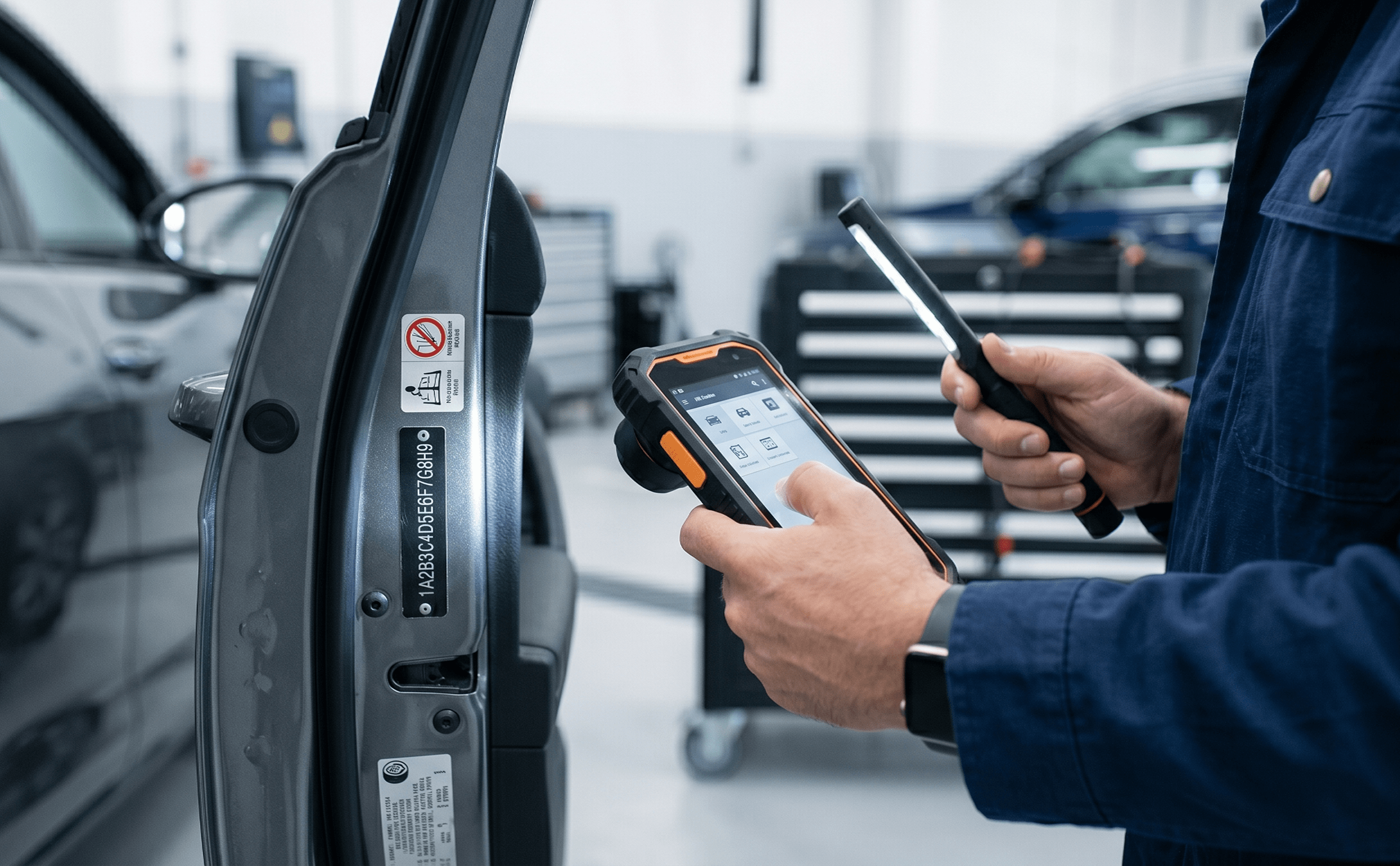
The VIN is a 17-character combination unique to every vehicle. This number is unique, and no two VINs are the same.
It contains encrypted important data:
- Manufacturer and country of assembly;
- Vehicle make and model;
- Body type;
- Engine displacement and type;
- Year of manufacture;
- Manufacturing plant;
- Vehicle serial number.
In just a few minutes, you can get a full history of the car and make sure that the price matches its actual condition.
How to check a US car by VIN code?
Use official databases and services for verification: CARFAX, AutoCheck, or local car import services.
Analyze the report: ensure that the mileage, accidents, and repairs match those reported by the seller.
The possibilities and limitations of tracking a vehicle by VIN alone
Despite its informative nature, the VIN isn’t a magic “know it all” button. There are important limitations.
Doesn’t show the current location of the car
The VIN can’t be used to track a vehicle’s current location. It’s not a GPS or tracking system.
Database dependency
All information is taken from available sources. If an event (such as an accident or repair) was not recorded, it will not be included in the report.
Mileage is not always accurate
Mileage data only appears when it’s officially recorded (during service, insurance, or vehicle inspection). If the mileage has been rolled back without being recorded, the VIN won’t reveal it directly.
Limited information on new cars
If the car was recently produced or just imported, there may be little data.
Does not replace live verification
A VIN check will not reveal the current technical condition of the vehicle:
- Engine wear
- Suspension condition
- Hidden defects after repair
Therefore, the ideal approach is to combine a VIN check with a professional inspection.
But to be completely sure, it’s best to use it in combination:
- VIN check
- visual inspection
- diagnostics at a service station
Information that can actually be obtained from the VIN code
Using the VIN code, you can check:
- Whether the vehicle has been involved in accidents;
- Insurance claims;
- Mileage history;
- Number of owners;
- Participation in auctions;
- Any restrictions, liens, or liens;
- History of theft;
- Photos of the vehicle before repairs.
In the used car market, you can’t always trust the seller’s words. A car may look perfectly fine on the outside, but the VIN history can tell a completely different story.
For example, a check may reveal:
- A serious head-on collision;
- Recovery after flooding;
- A rolled-back mileage;
- Several quick resales;
- Insurance total.
Tracking a US car by VIN code means knowing the history, status, and safety of your vehicle at every stage of its journey.
Essential tools for tracking a car after purchase
Modern technologies offer a variety of vehicle tracking solutions. But it’s important to understand: not all tools work the same, and each one serves a different purpose. Furthermore, even after installing tracking systems, the VIN continues to play a vital role in vehicle tracking.
GPS trackers
The most obvious way to track a vehicle is to install a GPS tracker. This device allows you to see where your vehicle is at any time and track its movements.
It allows you to:
- determine the vehicle’s exact location;
- view trip history;
- receive traffic notifications;
- monitor speed.
This solution is ideal for anti-theft protection and vehicle usage monitoring.
Embedded systems and mobile applications
Many modern cars are equipped with remote monitoring systems from the factory. Using a mobile app, the owner can check the car’s status and location.
These systems allow you to:
- track the car on a map;
- receive notifications about events;
- control some car functions remotely.
However, these features are not available on all models and are more common in newer cars.
Alarms and OBD devices
Additional solutions, such as GPS alarms or OBD-compatible devices, also provide a basic level of control.
They help:
- track vehicle movements;
- record break-in attempts;
- obtain vehicle technical data.
However, their functionality is generally limited compared to full-fledged trackers.
Where does the VIN code come into play here?
At first glance, it might seem that the VIN loses its significance after installing GPS systems. But this is not the case. While GPS is responsible for the present—where the car is now—the VIN is responsible for the past and its legal status.
Even after purchasing a car, the VIN remains an important tool because it allows you to:
- recheck the vehicle’s history upon resale;
- monitor changes (for example, the addition of new restrictions);
- confirm the vehicle’s authenticity;
- track new insurance claims (in some databases);
- inspect the vehicle before transferring it to another owner.
In essence, the VIN is your protection throughout the entire life of your vehicle ownership, not just at the time of purchase.
Obtaining tracking data with only the VIN code
When it comes to real-world tracking, it’s impossible to determine a vehicle’s current location using just the VIN. The VIN isn’t linked to GPS, satellite systems, or mobile geolocation. It doesn’t transmit signals or allow you to see the vehicle on a map online.
The VIN provides information about the vehicle’s past, but doesn’t answer questions about its current location, where it’s heading, or what route it took. For such tasks, GPS trackers, built-in telematics systems, or the manufacturer’s mobile apps are required.
If you only have the VIN, you won’t be able to track the vehicle in real time, but you’ll have access to a wealth of information about its past and status.
Stages and statuses that can be seen when tracking a vehicle
After the transaction is completed, you want to know what stage the vehicle is in, when it will arrive, and whether there are any delays along the way. This is where tracking systems and VIN verification are especially useful, helping you obtain up-to-date information on the vehicle’s status.
Confirmation of purchase
The first status that typically appears after a transaction is confirmation of the vehicle’s purchase.
At this stage, you can see:
- Purchase date;
- Lot or order number;
- VIN;
- Payment confirmation;
- Seller or auction details.
This stage is especially important because the VIN becomes the primary identifier for further tracking.
Preparing for shipment
After purchase, the vehicle enters the pre-transportation stage.
During this period, the following statuses are typically displayed:
- Vehicle received at the warehouse;
- Undergoing inspection;
- Awaiting paperwork;
- Preparing for loading.
For vehicles from the United States, this stage may include a post-auction inspection and photographic documentation before shipping.
Loading and shipping
When a vehicle departs, the system displays the following status block.
The most common statuses are:
- Loaded onto a car carrier;
- Sent to port;
- Delivered to port;
- Awaiting sea shipment;
- Loaded onto ship.
At this stage, it’s especially important for the owner to understand the current status, as it directly impacts delivery times.
Transportation
This is the main tracking stage when the vehicle is in transit.
You can see the status:
- in transit;
- in sea transport;
- transiting through an intermediate port;
- clearing customs;
- sent for domestic delivery.
Sometimes the VIN code is also used in logistics systems to reflect changes in insurance status or registration data.
Arrival and delivery
The final stage is the vehicle’s arrival in the destination country and delivery to the owner.
The following statuses are typically displayed:
- arrived at port;
- cleared customs;
- handed over to the carrier;
- delivered to the warehouse;
- ready for pickup;
- delivered to the owner.
It is at this stage that the VIN again plays an important role, as it is used to verify documents and confirm that it is your vehicle that has been received.
Common tracking problems and solutions
There is no exact location of the car
A common mistake owners make is expecting the VIN or auction database to show the car’s current geolocation. In reality, the VIN only records the vehicle’s identification and history.
Solution: use GPS trackers or built-in telematics systems. The VIN remains for history verification, legal clearance, and document verification.
Delay in status updates
In logistics systems, vehicle movement information is updated with some delay. This is sometimes due to document processing, customs clearance, or uploading data to the database.
Solution: monitor multiple information sources simultaneously. Use services that update statuses via auction, port, or carrier APIs and verify the data against the vehicle’s VIN.
No data on intermediate stages
Some databases only show key statuses—purchase, loading, arrival. Information about intermediate movements may be missing.
Solution: When purchasing a car from the US or Europe, check with the logistics company for detailed tracking information. The VIN code will allow you to verify each stage with the documents and ensure that the car has indeed passed through the required points.
Documentation errors and VIN discrepancies
Sometimes the shipping company or seller enters the VIN with a typo, preventing vehicle information from appearing in systems.
Solution: Check the VIN at all stages of delivery. Even a small error in one digit can block access to the vehicle’s history and status.
Limited access to foreign bases
If a car is imported from the US or Europe, not all databases are available to users in other countries. Information may be partial or unavailable.
Solution: Use professional VIN verification services that aggregate data from different countries and auction systems. This will give you the most complete picture of the history and tracking.
Delivery Control Guidelines for US Car Buyers
- Track risk points such as intermediate warehouses, ports, and loading onto a car transporter. The VIN helps ensure that your vehicle is the one going through all stages.
- Capture evidence—vehicle photos and document scans—at every step, linking them to the VIN for a secure digital chain.
- Set up notifications for unusual events such as delays, route changes, or carrier changes. The VIN helps verify data with your vehicle.
- Verify trim levels by VIN—ensure that options and modifications match the advertised model.
- Post-delivery monitoring—check registration, insurance claims, and legal restrictions by VIN to protect your investment.
- Compare the VIN with local databases—ensure the vehicle is legal and its history matches the documents in your country.
Buying a car from the US is a chance to get a great vehicle at a great price. But the journey from the auction to your garage is full of nuances: loading, sea freight, customs, delivery to the warehouse, and even home. A mistake at any stage can be costly.
By using the VIN code and tracking, you take complete control of the situation. You know for sure: this is your car, its history is clear, the equipment matches the description, and the status is transparent and verifiable at every stage of delivery.
Don’t leave your purchase to chance. Checking a US car by VIN code is your key to a reliable vehicle history and confidence in your purchase.
Frequently Asked Questions
No, you can’t track a container directly using its VIN. The VIN is a unique identifier for the vehicle, not the container or vessel, and it only reveals the vehicle’s history: accidents, insurance claims, mileage, previous owners, and auction data.
For actual container tracking, you need to use the container number provided by the carrier or shipping company. However, the VIN remains an important verification tool: you can verify that your vehicle is in the container by checking the VIN against the documents and photos of the vehicle at each stage of the journey.
To track a container, you need a unique container number, which is assigned to it by the carrier or shipping company. This number allows you to:
- Find out the current location of a container;
- track the route and stages of transportation;
- receive notifications about arrival at a port or warehouse.
You can track a container online using the official websites of shipping companies and logistics services using the container number.
The simplest algorithm:
- Obtain a container tracking number from the carrier or seller.
- Go to the shipping company’s website or use international freight aggregators.
- Enter the container tracking number in the tracking field.
- Get information about the current location, route, dispatch status, and arrival at the port.
There’s no direct link between a vehicle’s VIN and its container number—the VIN only reveals the vehicle’s history and identification, not its current status. The VIN helps verify the authenticity of the vehicle in the container, but it doesn’t replace the container number for tracking purposes.
It’s important to remember that the VIN only shows the vehicle’s history and doesn’t track its path within a container or during transport. To track the vehicle’s location during delivery, use container tracking.
When tracking a container online, you can obtain information about:
- The container’s current location along the route;
- the stage of transportation (loading, sea delivery, arrival at port, customs clearance, delivery to the warehouse);
- the estimated date of arrival;
- any delays or changes in the route;
- the vessel or vehicle transporting the container.
To do this:
- Get the vehicle’s VIN (17-character identification number) from the documents or body.
- Use trusted online services that aggregate data from US auction, insurance, and registration databases.
- Get information about:
- Involvement in accidents;
- Insurance claims;
- Number of owners;
- Mileage;
- Participation in auctions;
- Presence of restrictions, liens, or seizures;
- Factory configuration and modifications.
- Check the information against the ad and the vehicle documents.
The VIN code does not allow for real-time cargo tracking. It uniquely identifies the vehicle and provides information about its history, but not about the current location of the container or vehicle in transit.
VIN information is only accurate regarding:
- Vehicle history (accidents, insurance claims, mileage, previous owners);
- Participation in auctions and sales;
- Legal status (restrictions, liens, arrests);
- Factory configurations and modifications.