

Buying a car at American auctions is a real way to save from $2,000 to $5,000. However, you pay for these savings with your own time and full responsibility for every stage: from choosing a lot to customs clearance at the port.
We will explain how to bid on Copart and IAAI yourself, how not to overpay for delivery, how to import a car from the USA on your own, and what to check in documents so the car doesn’t get “stuck” at customs.
Why buying a car from the USA is attractive but hides risks in independent purchase of a car
The main reason is the insurance market model. In the U.S., it’s often more выгодно for insurance companies to write off a car after a minor accident, compensate the owner, and put the vehicle up for auction rather than pay for expensive repairs at an official service. But:
- Through reports like Carfax or AutoCheck you can learn almost everything about a car: from the number of owners to maintenance history.
- American versions of cars usually have better equipment (leather interior, sunroof, premium audio) than similar models for the European market.
- Odometer rollback in the U.S. is a criminal offense, so dashboard mileage is generally reliable.
Risks of buying on your own: where can you make mistakes?
When a buyer decides to save on a посредник, they take on the roles of appraiser, logistics manager, broker, and lawyer at once. Your main risk areas:
- At Copart or IAAI auctions, you often come across lots listed not by insurance companies, but by resellers. They buy total junk and hastily restore the exterior (so-called “cosmetics”) to make the car look intact in photos. Without experience, it’s extremely difficult to distinguish an insurance lot from a “home-made” resale.
- Not every type of document allows you to export a car. If you mistakenly buy a lot marked “Bill of Sale” or “Junk Title,” the car could be permanently stuck in a US port without permission to leave, or you could face insurmountable difficulties clearing customs in Ukraine.
- Photos don’t convey the smell of a flooded interior or the electronics problems caused by a jump-start. An independent buyer can’t always adequately estimate the cost of future repairs, which can ultimately negate any savings.
- Car shipping is a chain: auction -> forwarder’s lot -> port -> container -> ocean -> unloading -> customs. At each stage, delays, additional costs due to downtime, or even damage to the vehicle when loading into the container are possible.
How to participate in a car auction and avoid “invisible” damage: pitfalls when choosing a car
Participating in online auctions is a mix of speed and cold calculation. When the timer counts down and bids rise, it’s easy to get passion. But the lot selection stage determines everything.
Incorrect repair estimation
A car may look almost perfect in photos, but hidden costs can exceed its market value:
- A minor wheel impact may require replacing suspension components and steering systems.
- Structural damage (pillars, frame rails) requires complex repairs.
- Modern cars (especially Tesla or new German brands) have expensive sensors and electronics—often overlooked by beginners.
Ignoring history (VIN code)
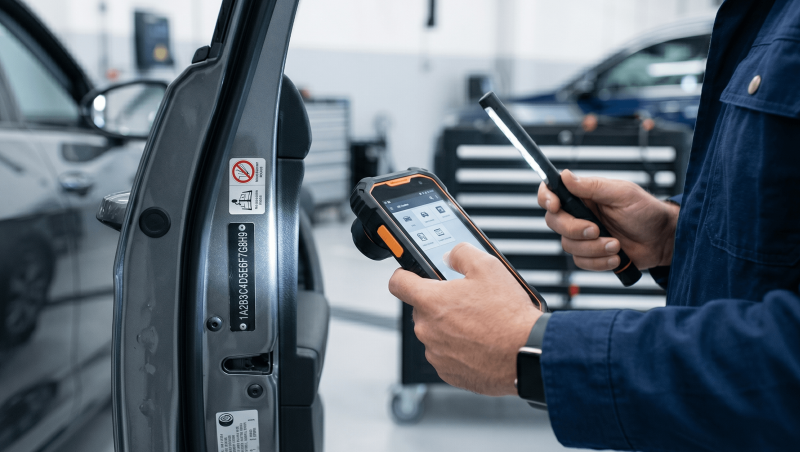
The biggest mistake is buying a car based solely on its current condition. The VIN (Vehicle Identification Number) is the car’s “digital DNA,” revealing much more about it than the seller.
- Do you see a car with a “Run & Drive” status from the insurance company? Check its history. It often turns out that the same car was bought at another auction three months ago in a “total wreck,” hastily repaired in a garage, and then listed again as a “minor accident.” Without a Carfax or EpicVin report, you’ll never know that under that pretty hood are two different cars welded together.
- The VIN will show whether the car has had maintenance. If the owner hasn’t changed the oil for 50,000 miles, the engine may “die” within a week of arrival, even though the car’s exterior will shine.
- “Flooded” status. Water is the most insidious enemy. A car may start and run after a flood, but corrosion will destroy the electronics within a month. Only a VIN history check will tell you if the car was in a disaster zone.
If you feel the technical nuances of auction reports, complex logistics chains, or the intricacies of customs legislation are becoming too risky, it’s best to entrust the matter to experts. Logistix101 specializes in resolving precisely those issues that are difficult to resolve on your own.
Is it possible to buy a car from the US yourself without running into financial traps: overpayments and fines for not knowing the rules of the auction?
Two main traps that can instantly “eat up” all the expected benefits.
Change of rates
The biggest mistake an independent buyer makes is not setting an upper limit. In the heat of the bidding, when only $100–$200 remains to win, it’s easy to cross the line of profitability.
- Auction fee: This is the main “invisible” fee. The fee isn’t fixed—it increases proportionally to your bid. For example, if you raise your bid from $4,500 to $5,100, your auction fee could jump from ~$700 to ~$900.
- Additional fees: In addition to the base price, you pay a Gate Fee ($79–$95), Internet Bid Fee ($100–$150), Environmental Fee ($15), and a document processing fee.
- Effect on customs duties: Remember that every additional $500 in your bid automatically increases the customs fee in Ukraine, as taxes are calculated based on the invoice value of the car.
So the golden rule is: calculate your maximum bid in advance, taking into account all fees, and never exceed it during live trading.
Fines for late payment
American auctions don’t wait. Payment rules are strict, and penalties for violating them are immediate.
- Typically, you only have 2-3 business days (including the day of the auction) for the funds to reach your Copart or IAAI account. Since international Swift transfers can take up to 48 hours, you must pay the day you win.
- If payment is delayed even by one day, the auction charges a penalty (usually $50).
If the vehicle isn’t picked up from the auction site within 3-5 days, a storage fee of $5 to $40 per day is charged. - The most painful financial blow is the lot cancellation. If the vehicle isn’t paid for within 7-8 calendar days, the auction will void your winning bid and impose a resale fee. This is typically 10-15% of your bid, but not less than $600-$1,000. Your account will be suspended until this fee is paid.
To avoid paying for your own mistakes, you need to have a clear financial plan and understand the logistics of money. This is where expert support comes in handy.
How to Import a Car from the USA Yourself: Logistics Pitfalls
Winning an auction is only 30% of the battle. The real test begins when the car has to be physically transported across the ocean.
1. Shipping to a US Port: Geography Matters
- The cost of logistics within the United States depends on the distance between the auction site and the nearest shipping port (e.g., New Jersey, Savannah, or Houston).
- If you purchased a car from a remote site in Montana or Wyoming, ground shipping by car carrier may cost more than ocean freight.
- You only have a few days to pick up your car from the auction without incurring storage penalties ($30-$50/day). If your car carrier is delayed, the parking bill could be quite significant.
2. Port charges and export clearance
Before loading into a container, the car is transported to the freight forwarder’s warehouse. Here, a package of documents is prepared for U.S. Customs. You pay for unloading from the car carrier, storage at the port, and loading into the container.
If U.S. Customs selects your container for random inspection, this will add $200 to $1,000 to the logistics cost, which is divided among all the owners of the cars in the container.
3. Sea freight and risks: the ocean is unforgiving
Your car will spend 4 to 8 weeks in a closed metal box. If improperly secured inside the container or during a storm, the vehicles could damage each other.
Many people save on ocean freight insurance (1–2% of the cost), but if a container falls overboard or is seriously damaged during unloading, proving the carrier’s fault is virtually impossible.
4. Absence of an acceptance certificate
This is one of the most painful moments for an independent buyer. In auction sales, there is no traditional acceptance certificate documenting all scratches at the time of shipment.
You buy the car “as is.” If at the port it is discovered that valuable parts (mirrors, control units, or multimedia) that were shown in the auction photos have disappeared, filing a claim with anyone other than a professional, directly responsible intermediary will be impossible.
5. Document Title (registration certificate)
A title is a U.S. document of ownership. Without the original, a car will not be allowed to leave the U.S. or clear customs in Ukraine.
Names such as “Lien Paperwork,” “Bill of Sale,” or “Parts Only” can make export impossible.
If the original title is lost in transit, restoring it at the U.S. DMV can take months, during which time the car will sit idle at the port, accumulating storage debts.
So, how do you import a car from the U.S. yourself? It’s possible if you approach the process systematically: from choosing a car at auction and checking its history to arranging delivery and customs clearance.
Customs and legalization: how to avoid import denials
The final stage of import is crossing the Ukrainian border and clearing the vehicle of tax liabilities.
The main trap
It’s a mistake to assume that customs calculates taxes solely based on the price you paid at auction. In fact, “customs value” is a complex figure.
- Customs takes into account not only the winning bid amount but also the auction fee (buyer fee) and, in many cases, the cost of delivery to the Ukrainian border. If you declare only the net price of the lot, the customs inspector has the right to raise the value to the average market value according to the catalog (for example, NADA), which will instantly increase the VAT and duties by hundreds or thousands of dollars.
- Attempts to “correct” an invoice in a graphic editor are a sure way to have the car confiscated and criminal charges opened. Modern customs databases have access to auction archives and can see the actual selling price of each lot.
- A classification error (for example, incorrectly identifying the engine type—gasoline or hybrid) can result in higher excise taxes.
Risks of certification and registration
Even if the car has successfully passed customs, certification still lies ahead.
- Lighting standards: American standards (red turn signals, no rear fog lights) do not comply with European standards in force in Ukraine. Without retrofitting the lighting, you will not receive a certificate of conformity.
- Emission standards: The vehicle must comply with at least the Euro-2 standard (for used passenger cars). If the vehicle has damage to the exhaust system or is missing a catalytic converter, it will not pass the laboratory test.
A turnkey purchase means savings, not expenses.
Many people mistakenly consider professional support services an unnecessary expense. However, the experience of hundreds of imported cars proves that a turnkey solution isn’t just convenience; it’s a strategic investment in the security of your transaction.
We’ll be your primary savings tool where independent buyers typically lose money.
So, how do you buy a car from the US yourself? Partnering with Logistix101 will help you with the issues you can’t resolve on your own. We’ll transform a risky game into a transparent business process, where the end result is a high-quality car at a fair price.
Frequently Asked Questions
Completely risk-free—no, as hidden damage and paperwork and logistics issues are possible. However, these can be significantly reduced by checking the car through Carfax or AutoCheck, choosing verified listings on Copart or IAAI, and calculating all costs in advance, from purchase to repair.
First, there’s hidden damage—photos from Copart and IAAI auctions don’t always show the car’s actual condition, and additional defects may be discovered after delivery.
Second, there’s an incomplete or inaccurate vehicle history: even a Carfax or AutoCheck check doesn’t guarantee 100% transparency (for example, not all accidents or repairs are recorded).
A third important consideration is financial risk. Many buyers underestimate the full cost: auction fees, US shipping, ocean freight, customs clearance, and repairs are added to the price of the car, which can significantly increase the cost.
First, set a budget, taking into account not only the price of the car but also additional expenses such as auction fees, logistics, customs clearance, and repairs.
Next, familiarize yourself with how Copart and IAAI auctions work: how the bidding process works, the different types of lots, and what a car’s condition means. Be sure to check the car’s VIN history through Carfax or AutoCheck to assess potential risks.
Initially, we recommend choosing cars with minimal damage and a clear history. And most importantly, don’t rush: it’s best to take your first steps cautiously, carefully reviewing each step before making a decision.
First, you need to set a budget and select a car at Copart or IAAI auctions. Before bidding, it’s important to check the car’s VIN through Carfax or AutoCheck and assess any possible damage.
Next, participate in the auction and purchase the car. After winning, you need to pay for the lot and arrange for shipping: first to the port in the US, and then by sea to Ukraine. The next step is customs clearance, paying taxes and customs duties.
Once the car arrives in Ukraine, all that remains is repairs (if necessary), certification, and registration.
Let’s summarize how to import a car from the US yourself: you select a car at auction, check its history and condition, arrange delivery to the port, and customs clearance in Ukraine—the entire process can be completed safely if you proceed consistently and thoughtfully.
Yes, for many, it’s much easier and safer. Buying a car yourself requires time, knowledge of Copart and IAAI auctions, a VIN check via Carfax or AutoCheck, and arranging delivery and customs clearance.
If you want to avoid these complications, Logistix101 can help: we’ll handle the car selection, auction participation, delivery, and customs clearance, and you’ll receive the car ready for use. This saves time, reduces risks, and makes the process as seamless as possible.
Use Carfax or AutoCheck. They will show accident history, “Salvage,” “Flood,” or “Total Loss” status, as well as the number of owners and mileage.
For Copart and IAAI, pay attention to the title type (Salvage, Clean, Flood) and damage description details. Photos may not show all issues, so it’s best to choose cars with minimal damage.
If possible, hire an independent expert or a company that inspects the car for damage, corrosion, and water damage.
Logistix101 helps inspect cars and filter out flooded vehicles, ensuring you only get a safe vehicle.
You can find cars at Copart and IAAI auctions for less than on the Ukrainian market, especially popular models from the US.
It’s important to factor in auction fees, shipping within the US and by sea, customs duties, taxes, and possible repairs. These costs can sometimes offset some of the savings.
Cars from the US often have lower mileage and better mechanical condition than similar cars in Ukraine, which can save you money on future repairs.
With the right lot selection and efficient logistics, savings can reach 10-30% of the price of a similar car in Ukraine, and sometimes even more.
- Check the prices of similar models at auctions like Copart and IAAI. Pay attention to the year, mileage, condition, and title type (Clean, Salvage, Flood).
- Add auction fees, shipping within the US and by sea, customs clearance, and repairs to the starting price. Sometimes a car appears cheap, but with all the expenses, it will cost more.
- You can use Carfax or AutoCheck to assess the risk. If the car has significant damage or is classified as “Salvage,” the starting price should be lower.
Check the title type (Clean, Salvage, Flood), carefully inspect the panels, frame, headlights and glass for cracks or deformations, use 360° photos or videos of the lot.
At Copart and IAAI auctions, most lots are only available to registered dealers in the US. If you don’t have a license, you must:
- Use an intermediary or broker who will act as a licensed representative and purchase the vehicle on your behalf.
- Sign a purchase agreement – the broker will officially purchase the vehicle at auction and arrange delivery to Ukraine.
- Conduct an inspection and verification – even through an intermediary, you can check the vehicle by VIN, obtain photos, and receive a damage assessment.
To avoid payment blocking, it’s important to use trusted methods, such as wire transfer to the auction’s official account or payment through the auction platform.
Before making a transaction, be sure to notify your bank about the international payment, specifying the amount and recipient to avoid suspicious payments. All payment details should be verified only on the official Copart and IAAI auction websites.
Payments must be made only through official Copart and IAAI auction channels and not transferred to the accounts of third parties or unlicensed “intermediaries.” Before making any payment, verify the details, retain all documentation, and notify your bank about the international transaction to avoid suspicion and blocking.
You can find a carrier through online platforms or specialized auto logistics companies. It’s important to check the carrier’s reputation, customer reviews, and cargo insurance—this will protect against damage during delivery.
Remember that shipping a car to a port in the US is a separate step from sea shipping to Ukraine, so choose companies that have experience working with Copart and IAAI auctions.
To avoid being scammed, it’s worth checking a company based on several criteria. First, it should be officially registered and licensed to work with Copart and IAAI auctions. Second, it should be experienced: a company with years of experience can demonstrate real-life cases and customer reviews. Also, pay attention to the transparency of the process—whether they provide photos, vehicle reports, detailed contracts, and the ability to track payments.